API Composition Pattern for Microservice Read Models
The use case
A booking summary page may need:
Booking
Payment status
Traveller
Hotel status
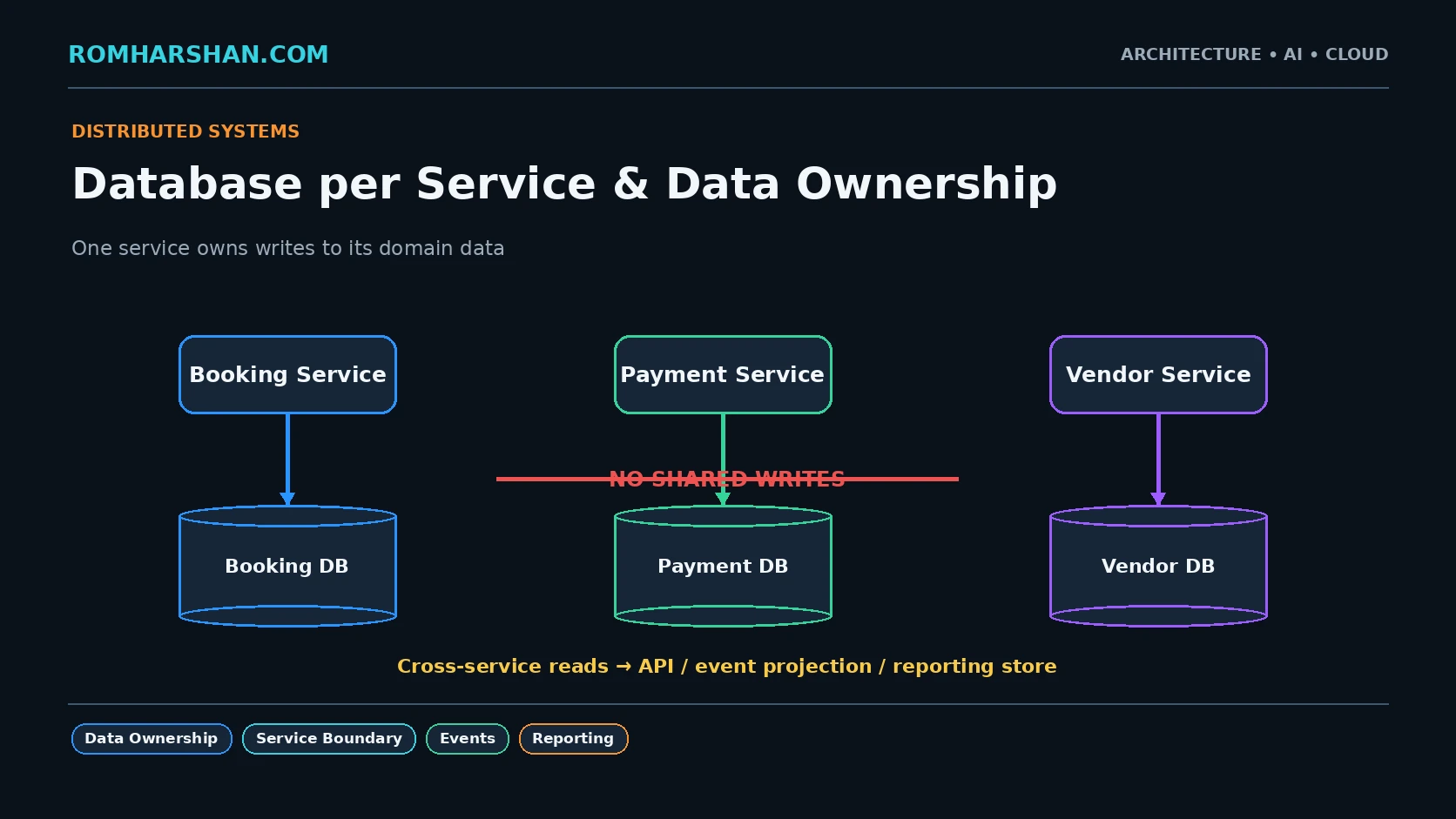
The data belongs to different services.
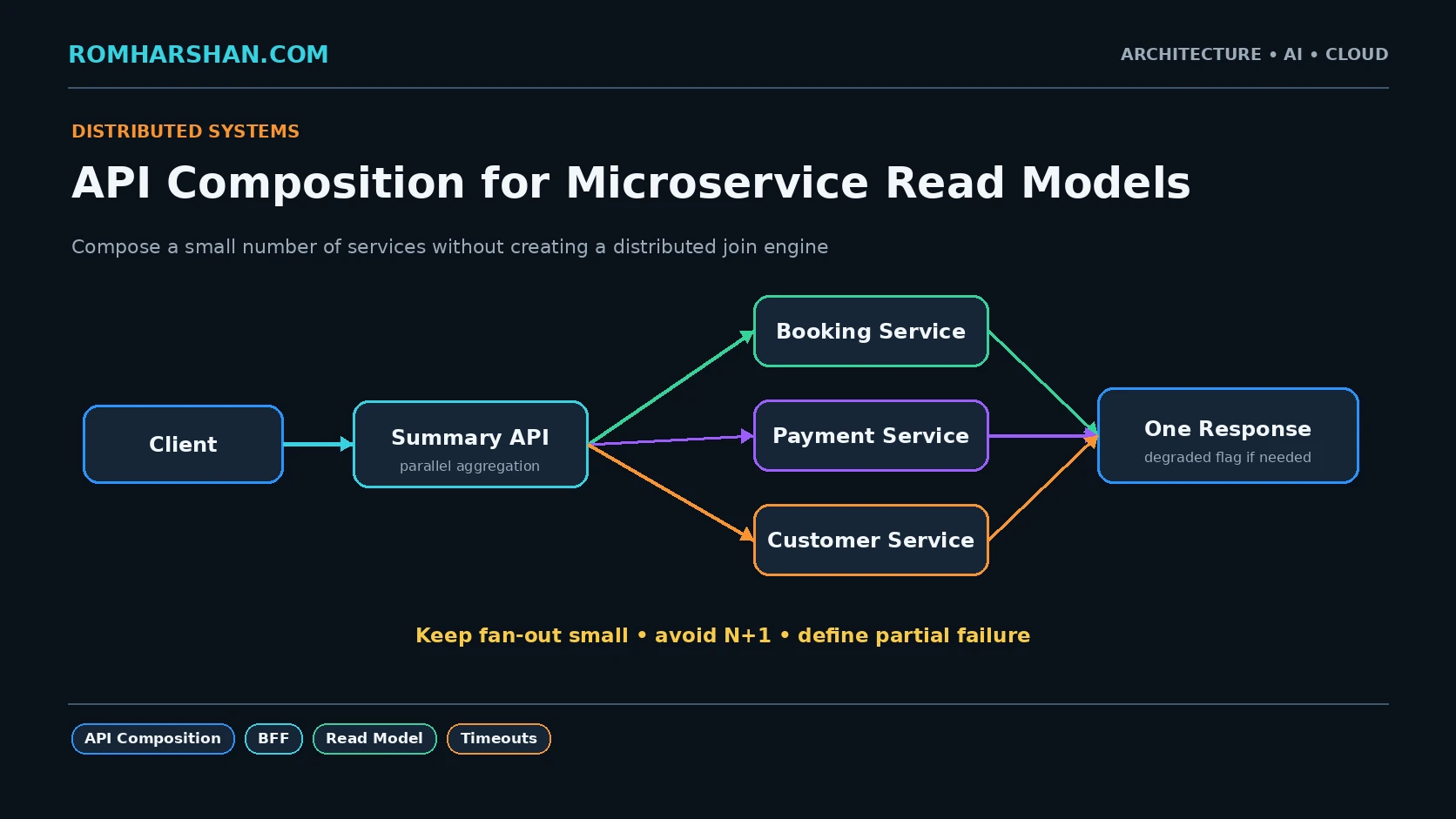
For a low/medium-volume interactive view, I can compose APIs rather than create a new database immediately.
BFF/query service
Web
 |
Booking Summary BFF
 |-- Booking Service
 |-- Payment Service
 |-- Customer Service
 `-- Hotel Service
NestJS:
@Get('/booking-summary/:id')
async summary(
  @Param('id') id: string,
) {
  const deadline = Date.now() + 1500;

  const [
    booking,
    payment,
    traveller,
  ] = await Promise.all([
    this.booking.get(id, deadline),
    this.payment.getForBooking(
      id,
      deadline,
    ),
    this.customer.getTraveller(
      id,
      deadline,
    ),
  ]);

  return {
    id,
    status: booking.status,
    paymentStatus: payment.status,
    travellerName:
      traveller.displayName,
  };
}
Parallel calls reduce serial latency.
Per-dependency budget
I do not let every call use the full page SLA.
overall page budget 1500 ms

booking 700 ms
payment 700 ms
customer 500 ms
Calls happen in parallel, leaving budget for gateway/rendering.
Partial failure
For a dashboard, payment status might degrade to UNKNOWN.
const payment =
  await safeCall(
    () =>
      this.payment.getForBooking(id),
    { status: 'UNKNOWN' },
  );

return {
  booking,
  payment,
  degraded:
    payment.status === 'UNKNOWN',
};
For a financial confirmation page, the same fallback may be unacceptable.
Fallback is a business decision.
When composition becomes wrong
If the page calls:
20 servicesfor every request, the probability of at least one dependency being slow becomes high.
At that point I consider:
- CQRS read projection;
- cached aggregate view;
- search index;
- materialized reporting model.
N+1 calls
List of 100 bookings:
1 call get bookings
100 calls get customer
100 calls get payment
This is a classic composition failure.
Batch endpoints or a prepared read model are better.
Production checklist
- Keep fan-out small.
- Call independent dependencies in parallel.
- Define per-call timeouts.
- Define partial-result semantics.
- Trace fan-out.
- Avoid N+1.
- Cache stable reference data.
- Move to projection when traffic/fan-out grows.
- Do not query another service DB directly.
FAQ
API Composition vs CQRS read model?
Composition reads live services at request time. CQRS maintains a prepared read model.
Where should composition live?
Often in a BFF or dedicated query service.
Can an API Gateway compose?
Technically yes, but I avoid putting complex business/read logic in the generic edge gateway.
Related architecture guides
- [Microservices Design Patterns I Have Used in Real Enterprise Projects](/articles/microservices-design-patterns-real-enterprise-projects)
- [CQRS](/articles/cqrs-command-query-responsibility-segregation-real-systems)
-
Architect's final take
API composition is useful while the fan-out remains understandable. Once the query graph becomes a distributed join engine, I build a read model.
Your feedback helps prioritize deeper technical content.

Romharshan Singh
Senior Solution Architect and Full Stack Technology Leader with 20+ years of enterprise engineering experience across AI, cloud, distributed systems, Java, Node.js, React, Angular, Kafka and Kubernetes.