Database-per-Service Pattern and Data Ownership in Microservices
The principle I care about
The most important part of database-per-service is not:
every microservice must buy its own database server.
It is:
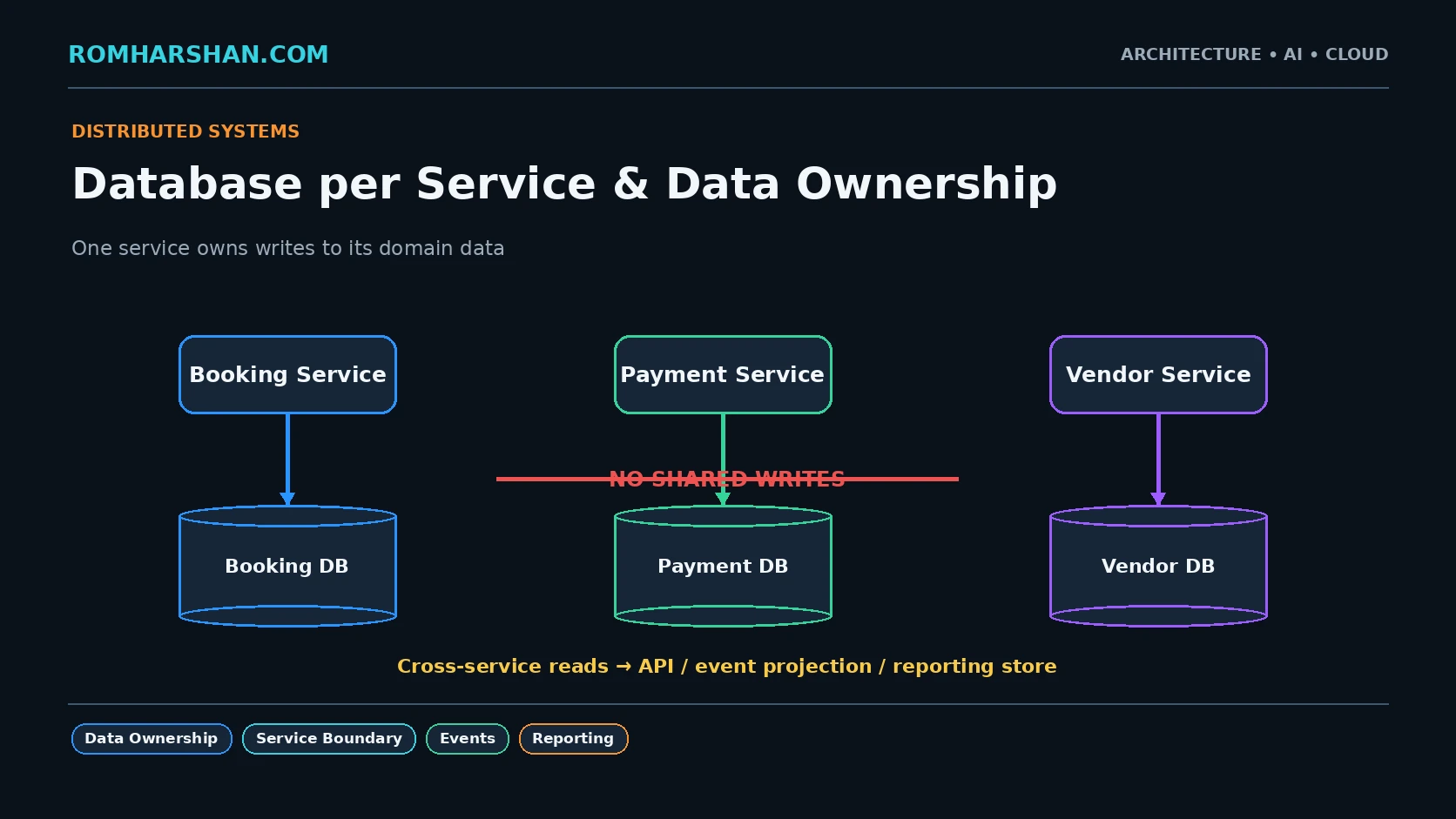
one service owns writes to its domain data.
Bad coupling:
Booking Service ----\
Payment Service -----+--> shared tables
Hotel Service -------/
Any service can change another service's data without its business rules.
Better:
Booking Service -> Booking data
Payment Service -> Payment data
Vendor Service  -> Vendor data
Physical isolation options
Ownership can be implemented as:
separate schema
separate database
separate cluster
separate cloud account/project
The correct level depends on scale, security and operations.
A small platform can keep multiple owned schemas in one managed DB cluster while application permissions prevent cross-domain writes.
Cross-service reads
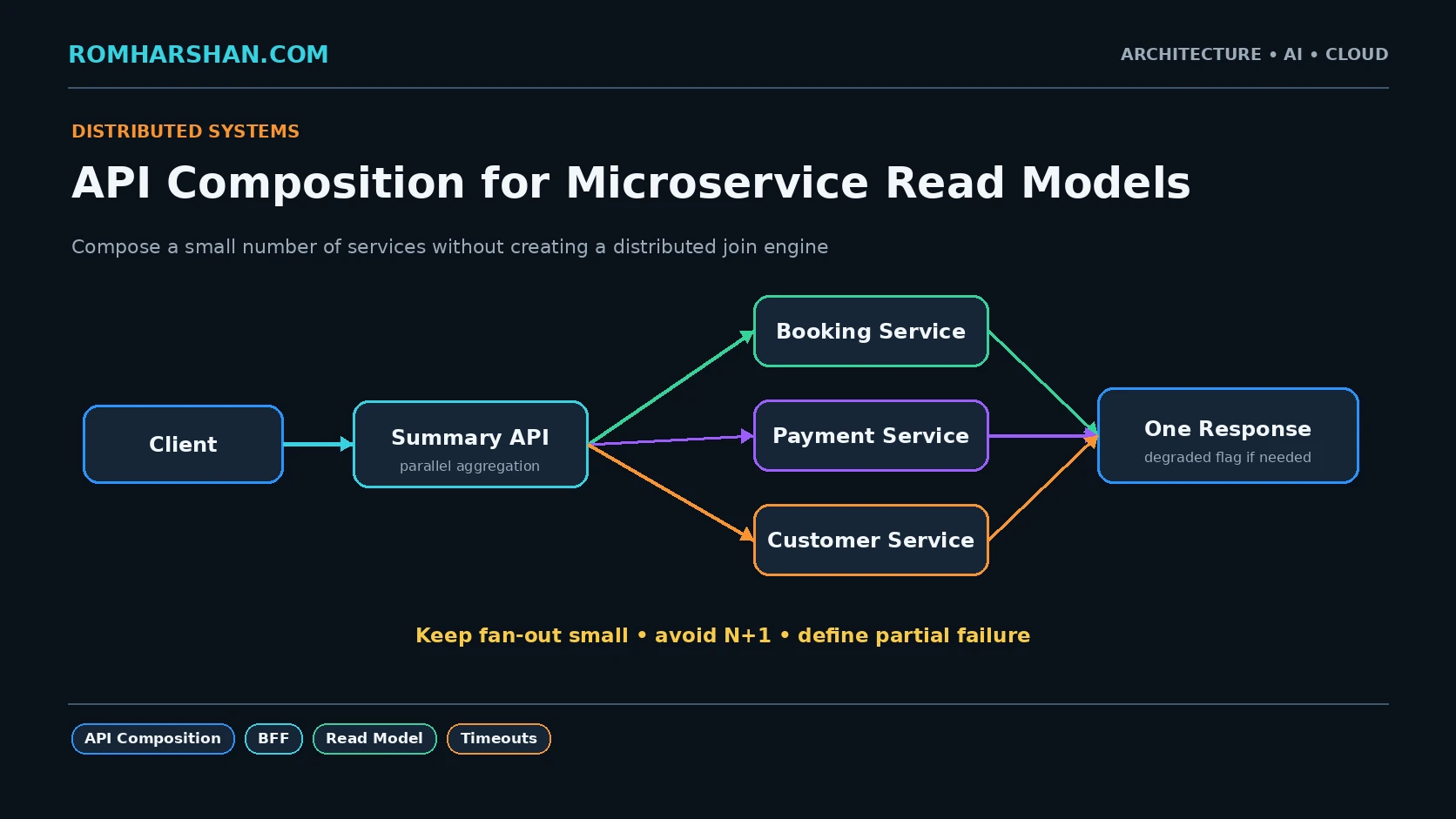
Option 1: API
GET /customers/C1001Option 2: local projection
CustomerUpdated
     |
Kafka
     |
Booking service
     |
customer_snapshot table
Projection:
@EventsHandler(CustomerUpdated)
export class CustomerSnapshotProjection {
  async handle(
    event: CustomerUpdated,
  ) {
    await this.bookingDb
      .customerSnapshot
      .upsert({
        customerId: event.customerId,
        displayName: event.displayName,
        version: event.version,
      });
  }
}
Reporting
A report that needs:
booking + customer + payment + productshould not automatically execute a runtime SQL join across four service databases.
I create:
- reporting warehouse;
- analytical store;
- read projection;
- event-fed reporting DB.
This keeps transactional ownership clean.
Cross-service transaction
If booking and payment must commit atomically in one database transaction, I ask:
are these actually separate service boundaries?
Sometimes the correct answer is to keep the operation inside one aggregate/service.
When boundaries are valid but operations span them, I use Saga/outbox/idempotency rather than shared writes.
Migration from shared DB
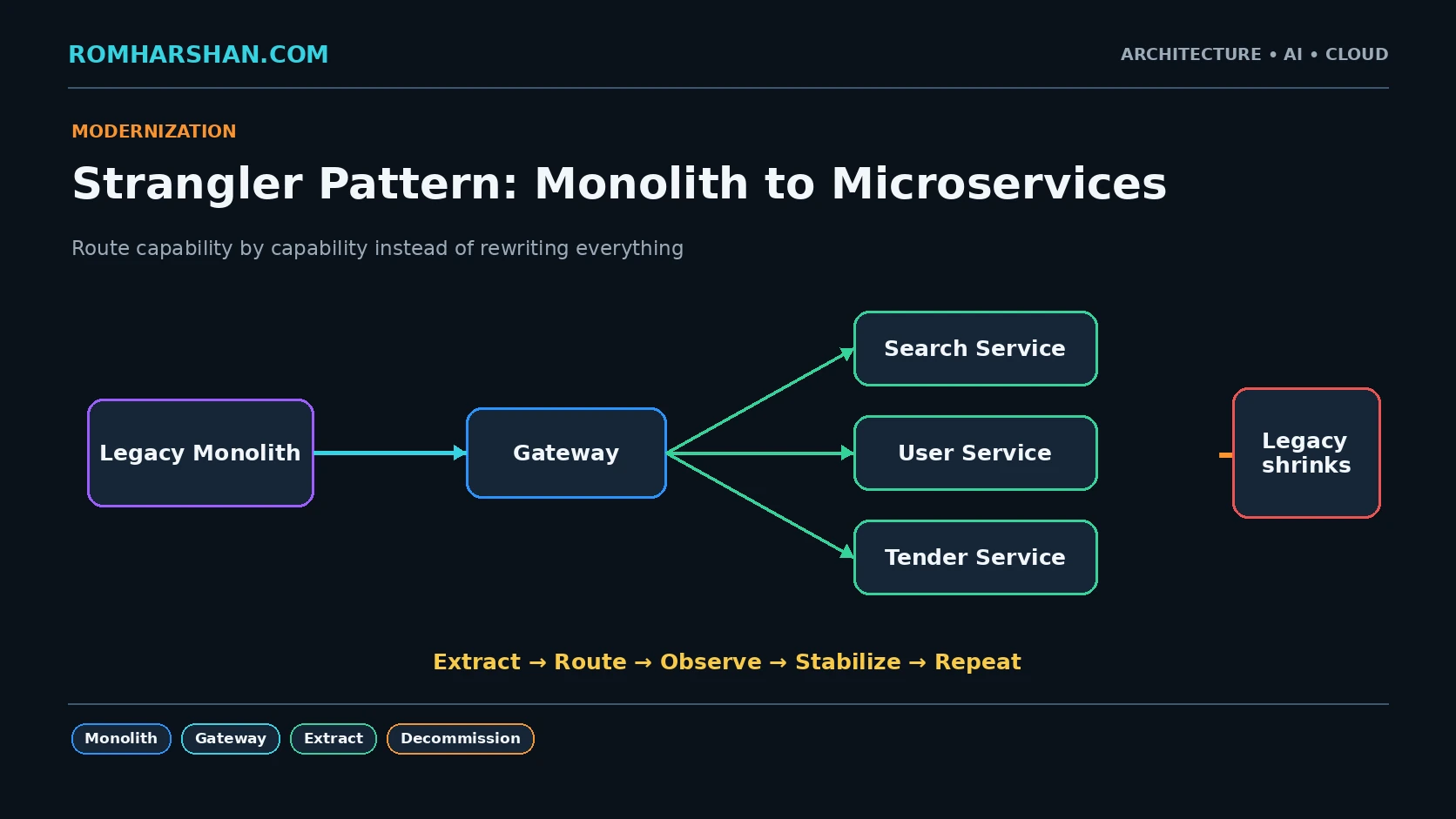
During Strangler migration:
Phase 1: shared DB, legacy write owner
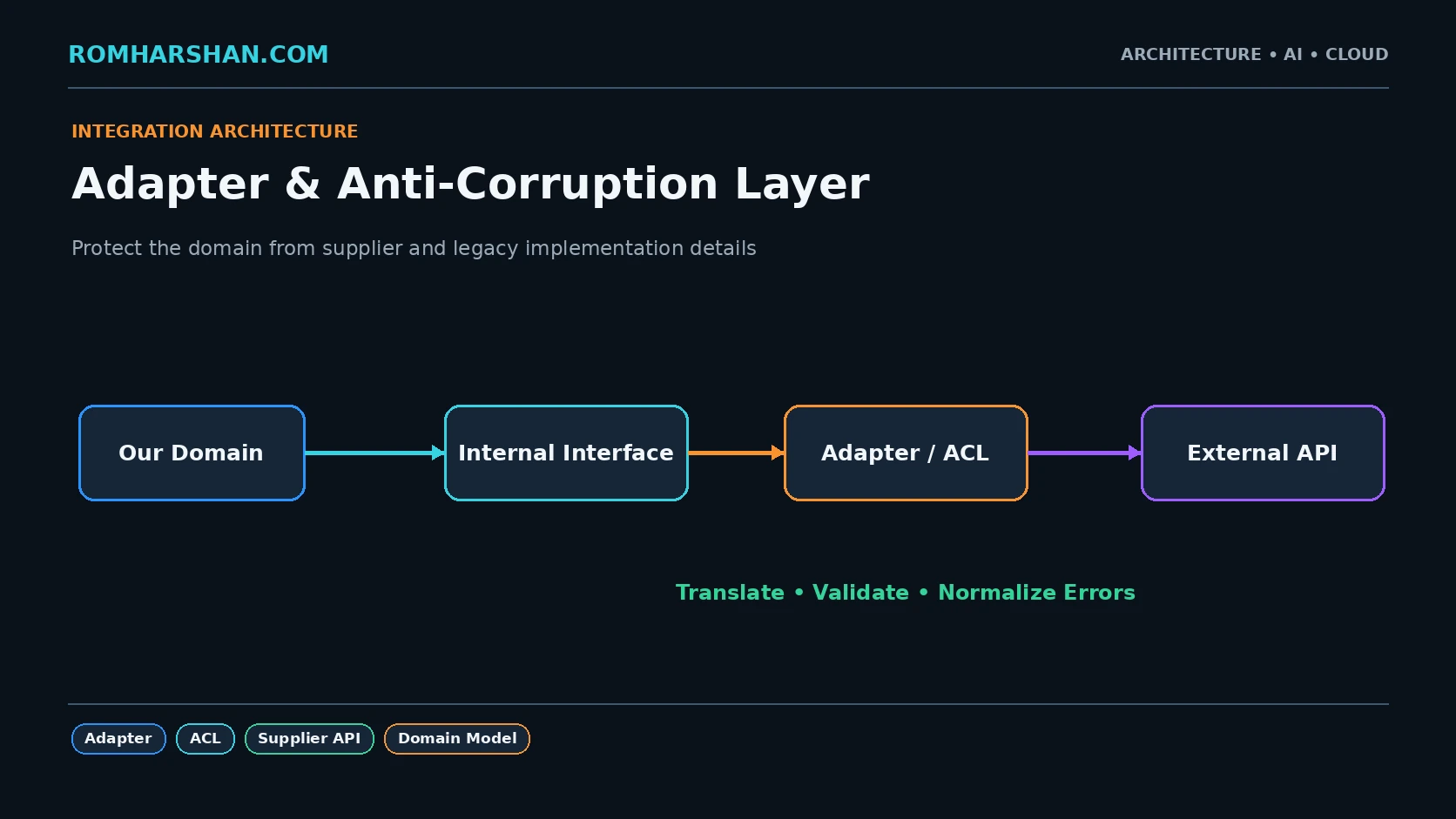
Phase 2: new service reads through ACL
Phase 3: new service becomes write owner
Phase 4: legacy receives API/event projection
Phase 5: old table access removed
I avoid uncontrolled bidirectional dual writes.
Production checklist
- Name the authoritative data owner.
- Restrict cross-service write credentials.
- Design APIs/events for other services.
- Build reporting separately.
- Plan backup/recovery per domain.
- Version data contracts.
- Avoid runtime cross-service SQL.
- Revisit boundaries when ACID needs cross them constantly.
- Define migration ownership stage by stage.
FAQ
Does every service need a separate DB server?
No.
Is a shared DB always wrong?
It can be a pragmatic transition, but shared writable tables reduce independent evolution.
How do I perform joins?
For operational reads use APIs/composition/local projections. For analytics use a reporting platform.
Related architecture guides
- [Microservices Design Patterns I Have Used in Real Enterprise Projects](/articles/microservices-design-patterns-real-enterprise-projects)
- [CQRS](/articles/cqrs-command-query-responsibility-segregation-real-systems)
-
Architect's final take
Microservices become genuinely independent only when data ownership is as clear as code ownership.
Your feedback helps prioritize deeper technical content.

Romharshan Singh
Senior Solution Architect and Full Stack Technology Leader with 20+ years of enterprise engineering experience across AI, cloud, distributed systems, Java, Node.js, React, Angular, Kafka and Kubernetes.