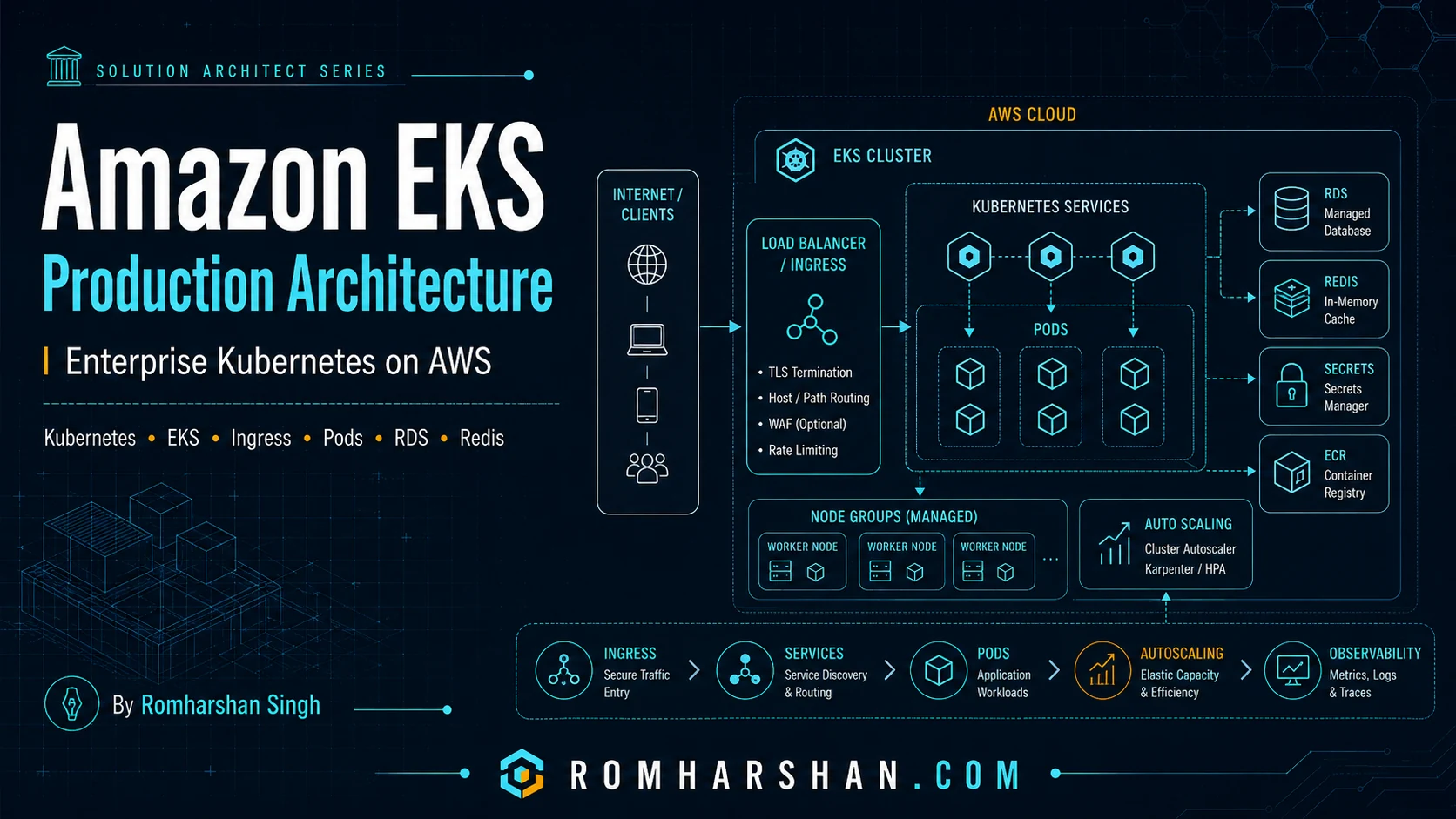
Amazon EKS Production Architecture: Cluster, Nodes, Networking, Security and Operations
How I think about EKS
EKS gives a managed Kubernetes control plane. It does not remove responsibility for:
worker capacity
networking
ingress
IAM
pod security
upgrades
observability
autoscaling
cost
application readiness
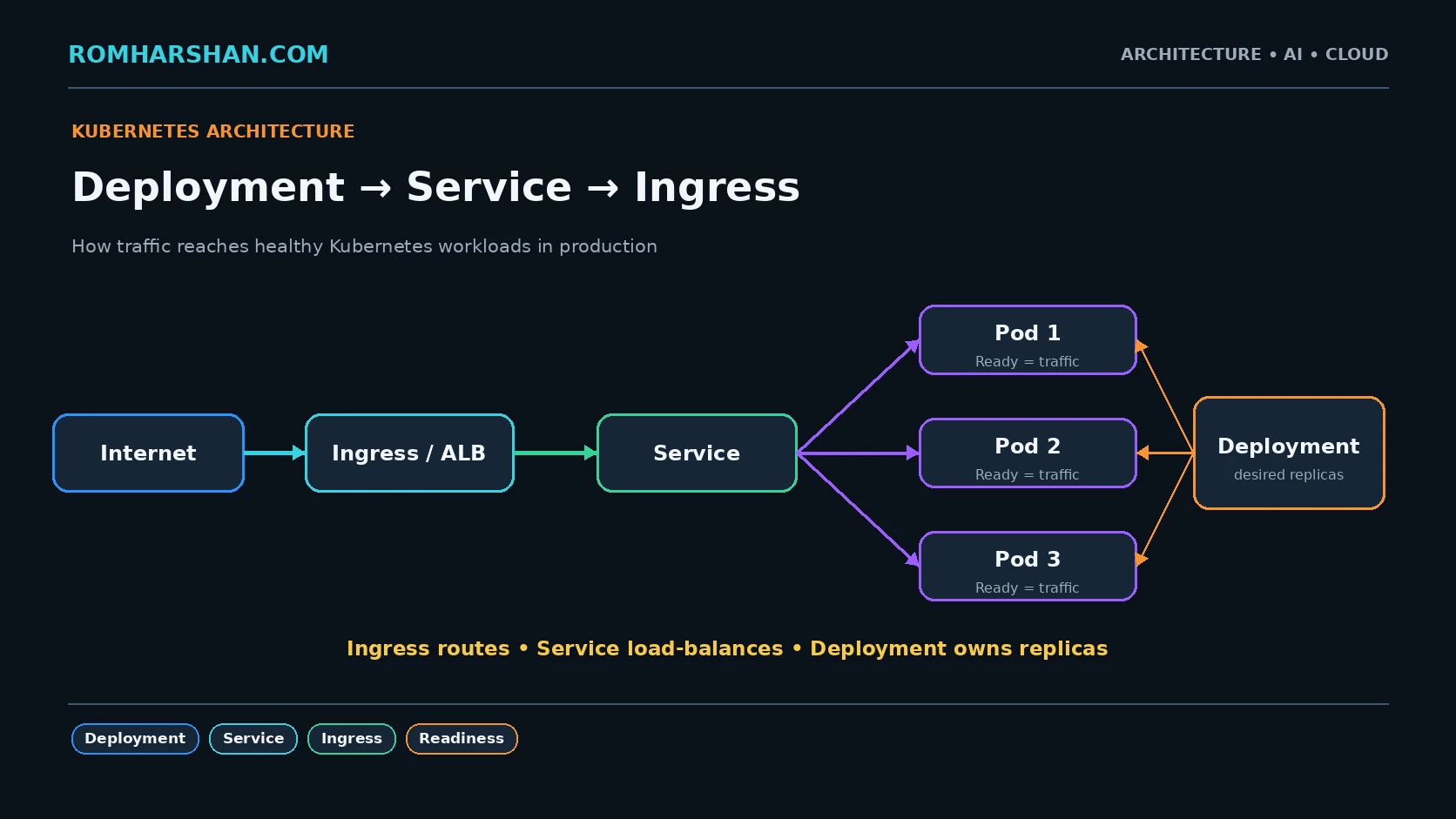
A simplified production topology:
Route53
  |
ALB / Ingress
  |
EKS Service
  |
Pods across AZs
  |
Managed Node Groups
  |
private subnets
Databases and managed services remain outside the cluster when appropriate.
Multi-AZ worker capacity
I spread worker nodes across availability zones.
AZ-A node group
AZ-B node group
AZ-C node group
Applications use topology spread/anti-affinity for critical replicas.
topologySpreadConstraints:
  - maxSkew: 1
    topologyKey: topology.kubernetes.io/zone
    whenUnsatisfiable: DoNotSchedule
    labelSelector:
      matchLabels:
        app: booking
Ingress
AWS Load Balancer Controller can create ALBs from Kubernetes ingress resources.
I separate public and internal ingress classes/security groups.
Not every service needs a public load balancer.
IRSA / workload identity
A pod that needs S3 should not receive the entire node IAM role.
I use service-account identity:
Kubernetes ServiceAccount
        |
        v
IAM Role
        |
only required AWS permissions
This reduces credential blast radius.
Node groups
Different workloads may need different capacity:
general on-demand
memory optimized
spot workers
GPU nodes
I use taints/tolerations to keep special workloads on intended nodes.
Cluster autoscaler / Karpenter-style capacity
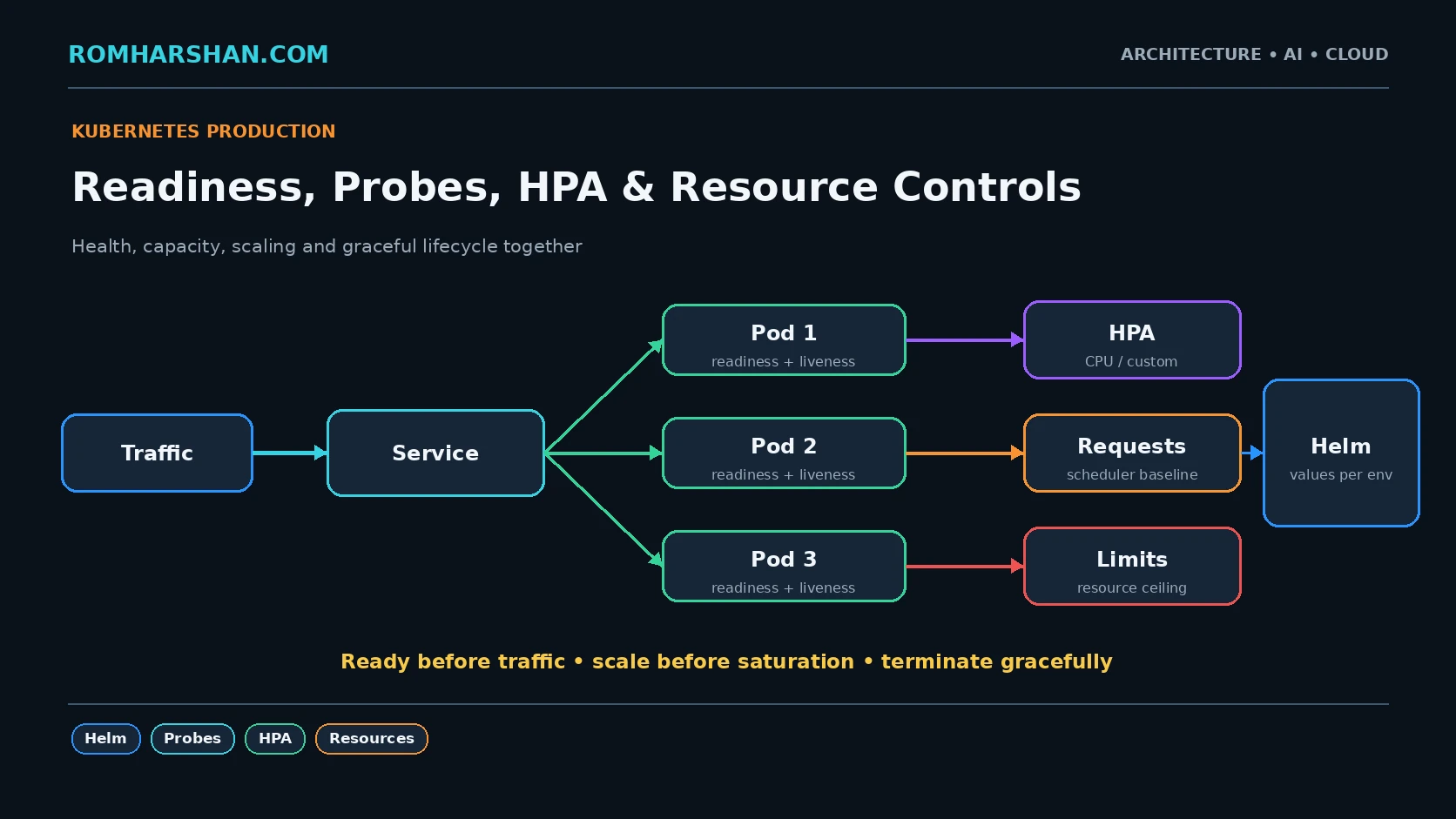
HPA adds pods.
If pods cannot schedule, cluster/node autoscaling adds capacity.
These are separate loops.
traffic increases
 -> HPA requests more pods
 -> no node capacity
 -> node autoscaler provisions node
 -> pods schedule
I monitor pending-pod time because autoscaling is not instantaneous.
Upgrades
Kubernetes/EKS versions have support windows.
Upgrade plan:
API deprecation scan
addon compatibility
test non-prod
control plane upgrade
node group rollout
workload validation
I do not discover removed APIs during production upgrade.
Network/security
I combine:
- private worker subnets;
- security groups;
- NetworkPolicy where enforced;
- restricted pod security;
- non-root images;
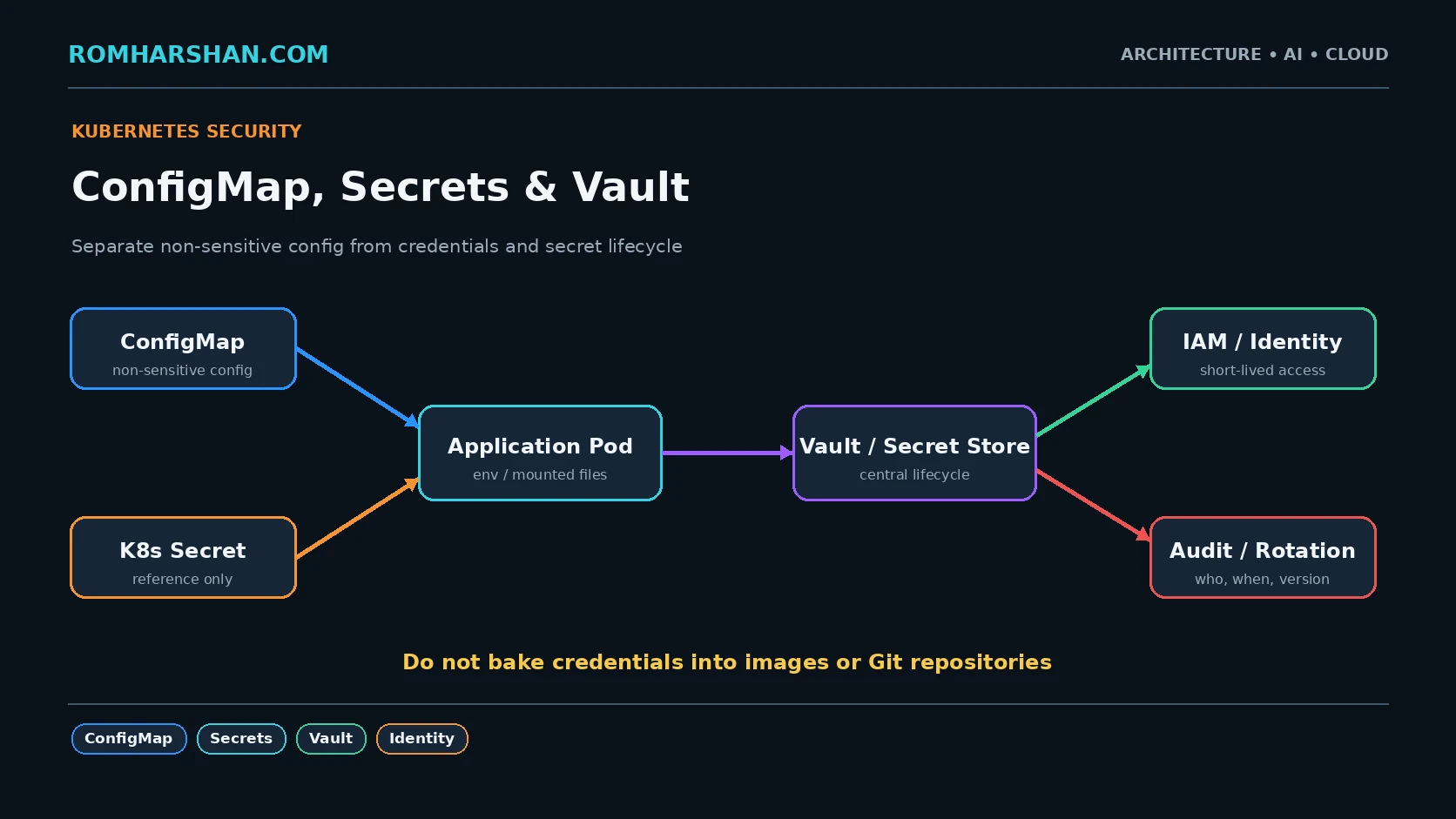
- secrets integration;
- IRSA;
- controlled egress.
Observability
Cluster signals:
node pressure
pending pods
OOMKilled
CPU throttling
pod restarts
API server errors
ingress 4xx/5xx
HPA desired/current
node provisioning time
Application signals remain separate.
Cost
Important EKS cost drivers:
- underutilized nodes;
- over-requested CPU/memory;
- NAT gateway egress;
- one ALB per service;
- large log retention;
- cross-AZ traffic;
- idle environments.
I review requests vs actual usage.
Production checklist
- Multi-AZ.
- Private workers.
- Managed node groups/controlled provisioning.
- IRSA.
- Ingress separation.
- Resource requests/limits.
- Pod disruption budget.
- Topology spread.
- Network/security policy.
- Cluster + app observability.
- Upgrade calendar.
- Capacity/cost review.
FAQ
EKS vs ECS Fargate?
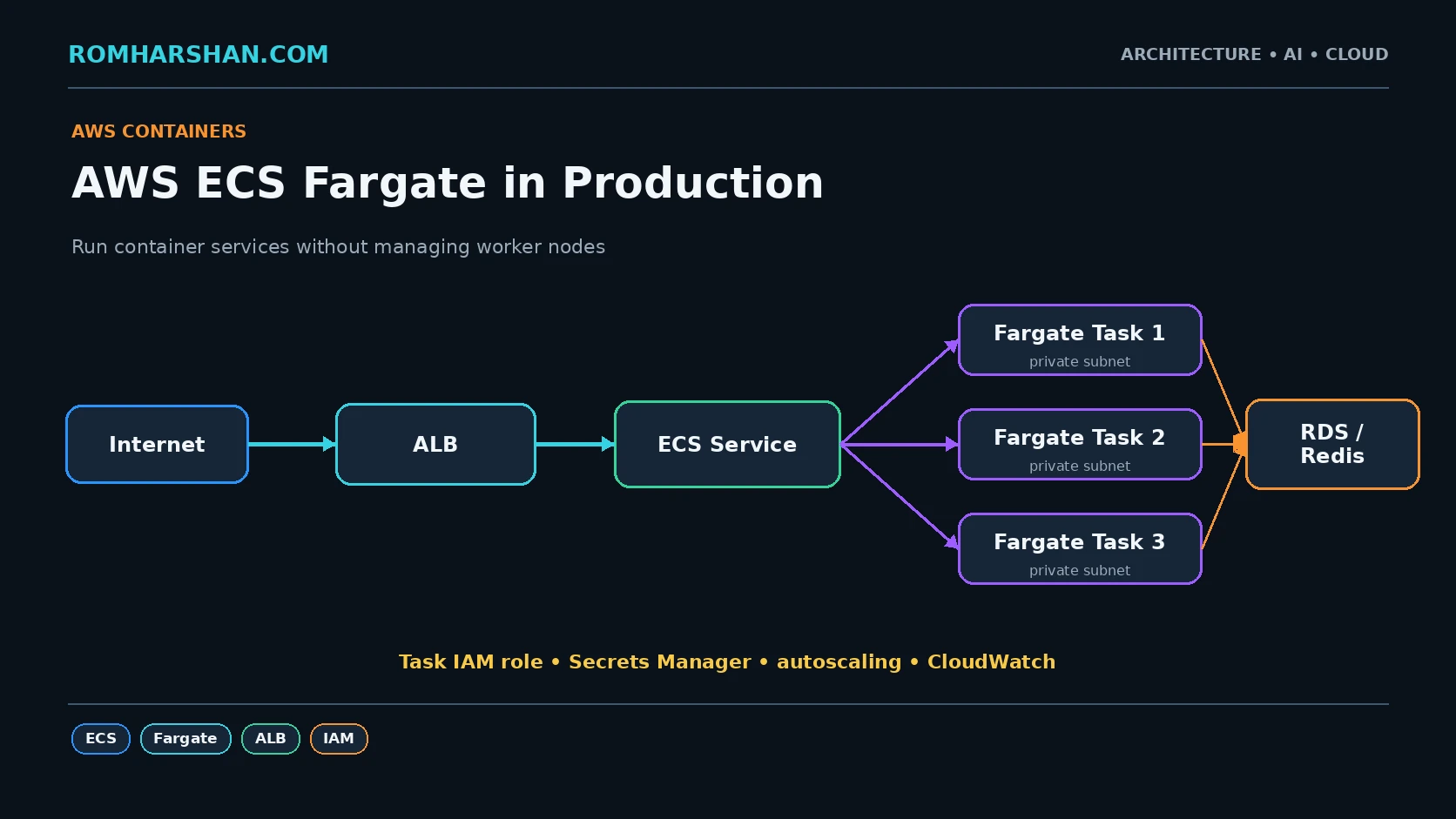
EKS provides Kubernetes ecosystem and flexibility; ECS Fargate reduces platform operational complexity.
Should databases run inside EKS?
They can, but I usually prefer mature managed database services for enterprise transactional data unless there is a strong reason otherwise.
Is managed control plane enough for HA?
No. Workload replicas, nodes, zones, ingress and dependencies still require HA design.
Related architecture guides
- [Docker to Kubernetes: Containers I Have Used in Real Enterprise Projects](/articles/docker-kubernetes-containers-real-enterprise-projects)
- [ECS Fargate](/articles/aws-ecs-fargate-containers-production)
-
Kubernetes Production Readiness
Architect's final take
EKS removes control-plane operations, not architecture responsibility. The production work is still in workload isolation, networking, identity, capacity and observability.
Your feedback helps prioritize deeper technical content.

Romharshan Singh
Senior Solution Architect and Full Stack Technology Leader with 20+ years of enterprise engineering experience across AI, cloud, distributed systems, Java, Node.js, React, Angular, Kafka and Kubernetes.